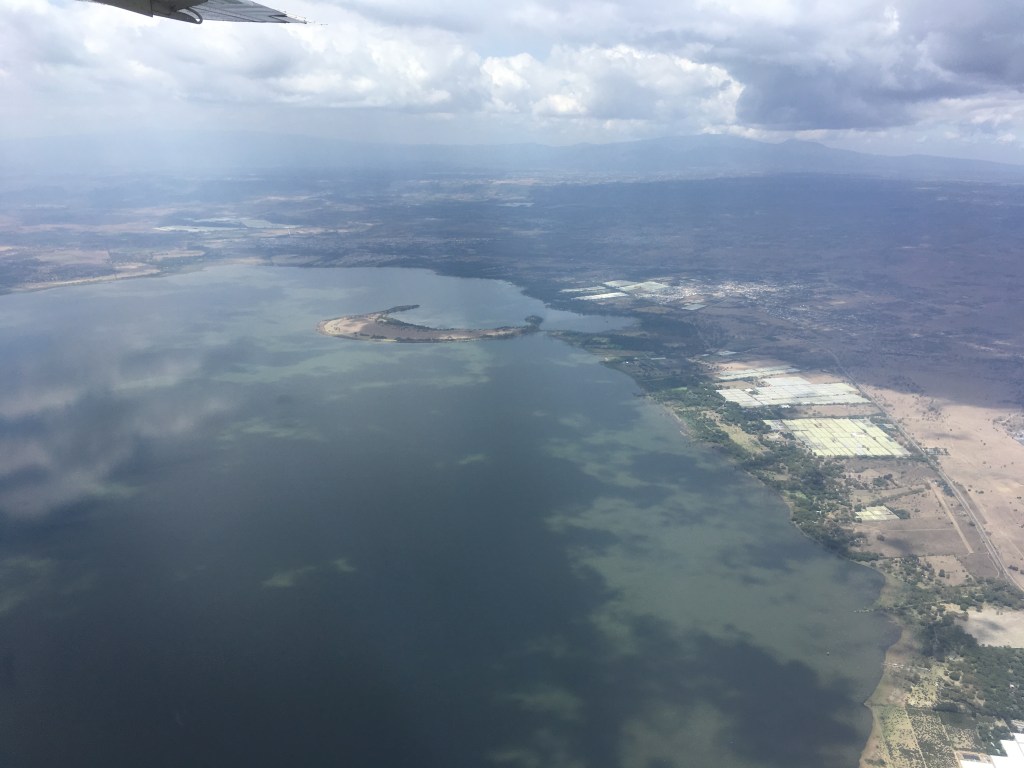
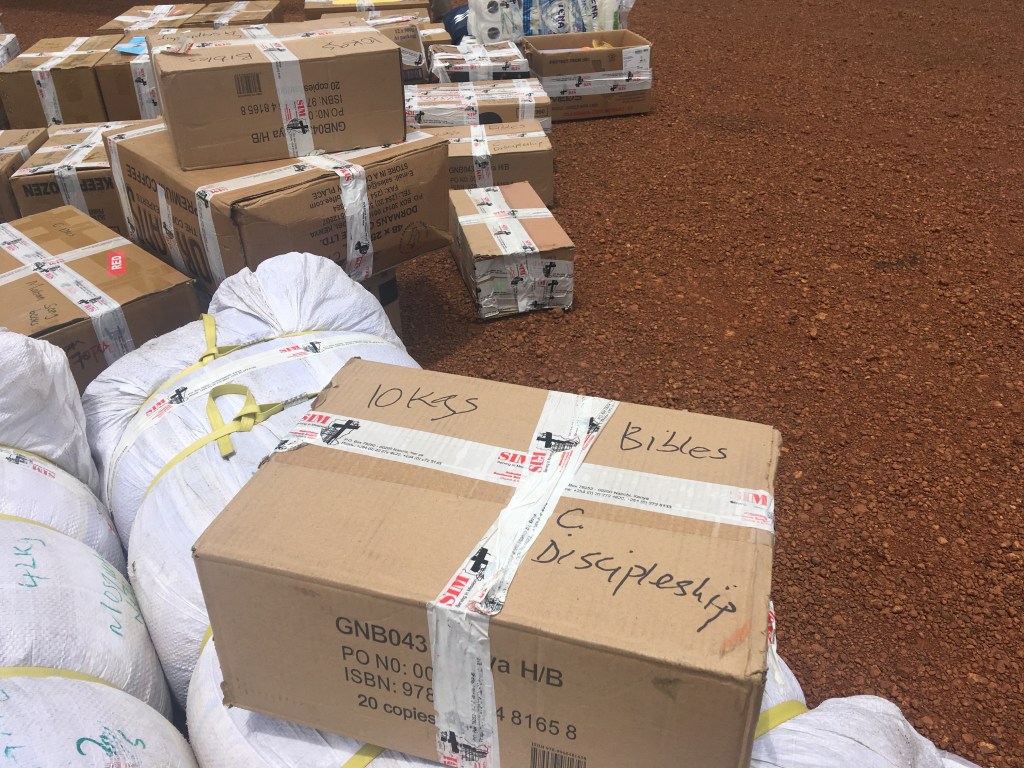
Peering down from 12,000 feet, I gaze upon the many greenhouses surrounding Lake Naivasha as my Cessna Caravan pulls its way through the blue and white puffy sky. I see the many lodges and campsites that dot the lake’s edge. Over long weekends, my family and I have enjoyed these quiet places of respite, away from the traffic and hustle of Nairobi city life. The lake is a couple hour drive by car, but it takes only minutes when flying out of Nairobi. I enjoy the amazing view, glad to be on our way. It has been a long day already and our journey North is just beginning. For several weeks, mosquito nets, food stuffs, soap, Bibles, discipleship materials and many other supplies have been arriving at the hangar to be carried North for today’s flight. With the items finally cleared by the customs agents and loaded on board, the SIM missionaries and I will fly 2.5 hours from Wilson Airport, Nairobi to Northern Kenya for the night. “Loki”, as we call it, provides a great starting point for criss crossing South Sudan the next day.
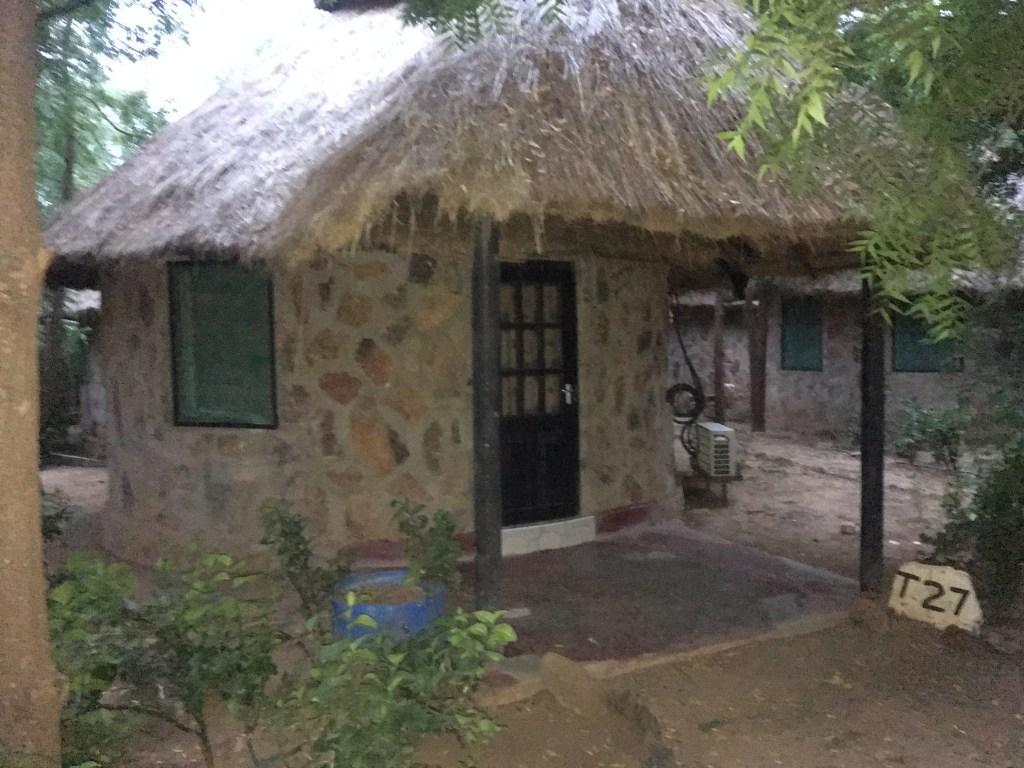
After a good night’s rest, the early morning preflight now complete and the missionaries buckled and briefed, we bow our heads and begin the day in prayer before starting the engine. I pray for God’s blessing on the journey ahead and for the flooding that is happening all around the mission station to which we are flying. I pray for God’s protection over us, asking that He watch over us like He has countless times before. Only this time when I pray, I am keenly aware that one of the missionaries on board has uniquely felt God’s protection before. It was 11 years ago when she boarded a Cessna Caravan, just like the one we are flying today, taking off from the very same runway to which we are now headed. The runway was muddy, and the aircraft became briefly airborne, only to crash and flip inverted, before coming to an agonizing stop. By God’s grace, she, the other passengers and the pilot survived that brief moment where their lives hung from the thinnest thread. That harrowing experience would have convinced almost anyone not to return, yet she has remained on the mission field, continuing to work in her remote community serviced only by little airplanes like the one in which she went upside down. Her incredible tenacity to overcome fear and keep on serving our Lord inspires me to the fullest.
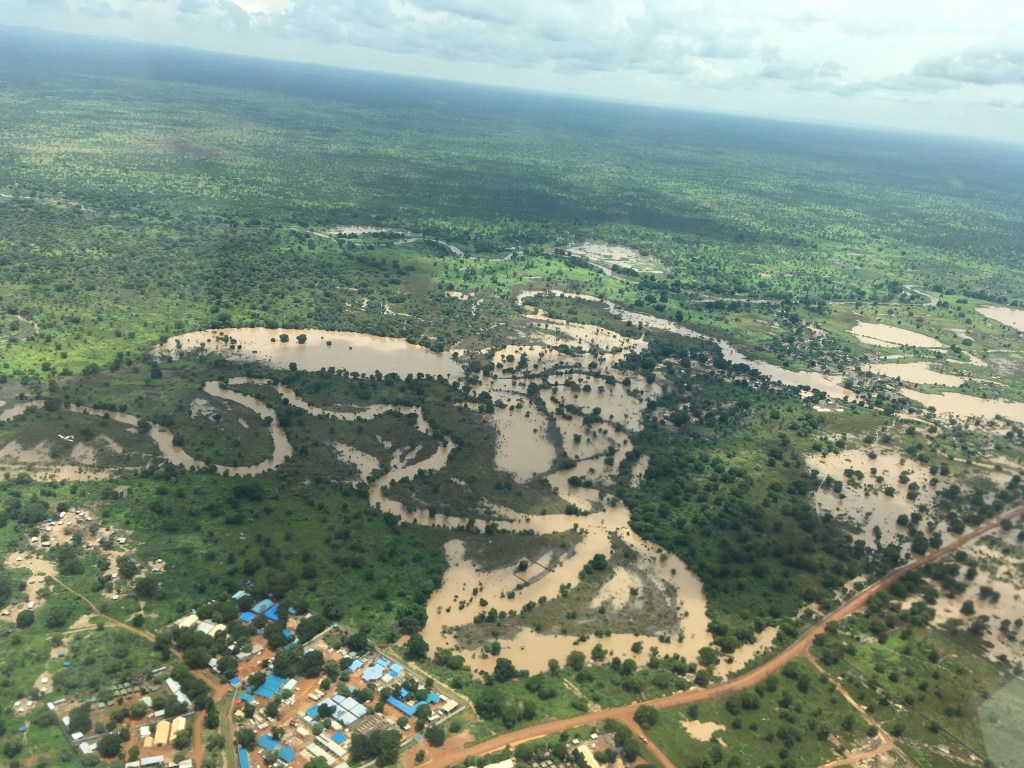
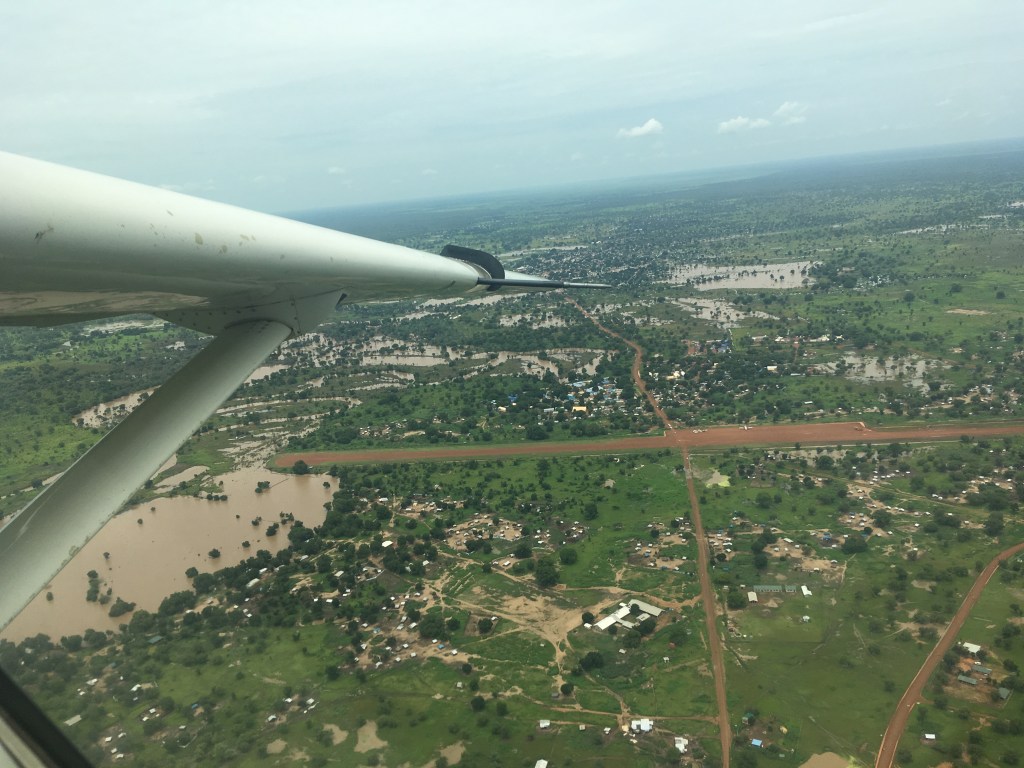
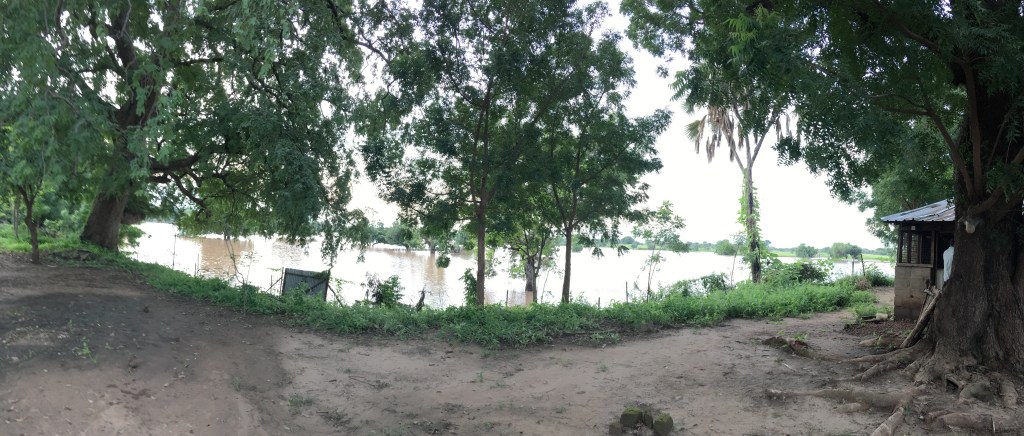
With my checklist complete, the engine happily awakens from its overnight slumber and the second day of our journey is underway. Our destination is Maban, South Sudan, located very close to the Sudan and Ethiopian borders. Heavy rains in Ethiopia have flooded the river that flows from Ethiopia into Maban, causing widespread devastation. Sadly, many of the lush crops and livestock have been lost as well. The mission station runway has been flooded, but yesterday’s report indicated the water had receded and the runway was dry. I am hoping that report is correct.
Now airborne, the little border town of Lokichogio grows smaller behind us as we cross over into South Sudan. Our first stop is an hour and half flight to Bor. We will be landing there for Immigration/Customs and fuel at the United Nations runway. John is the airport manager there, a tall, smiling and always welcoming South Sudanese man. It will be good to see him again. I remember the first day I met him. He asked me where in America I was from. Telling him I was from Washington State, I assumed I would have to clarify that this was not Washington DC. Unfazed and with a big grin on his face, he pulled out his wallet, showing me his Washington State Driver’s License saying, “I used to live there too.” I laughed and thought, ‘What a small world.’ Since that time, John has been a good friend, one who brings many smiles to my day.
Approaching the airfield, I see the runway is still muddy from yesterday’s hard rains. I take a long look to gauge the amount of mud and the locations of standing water. I remember reading about another accident here that occurred at least a decade ago, also resulting from a muddy runway. Mud and airplanes, they just don’t seem to like each other. I think to myself, “Are all these accident reports you read helpful Dan, or do they just freak you out?” I laugh, knowing the answer full well, saying to myself, “Yes, they are troubling to read, but they help me make it back home safely each night as well.” Accident reports written in blood keep one sober minded. Bor’s murram runway was improved following that accident and this amount of standing water appears acceptable to me. I proceed for landing. Water splashes the sides of the shiny blue and white aircraft making a muddy mess, but I decelerate without slipping and sliding, a sign that my decision was correct.
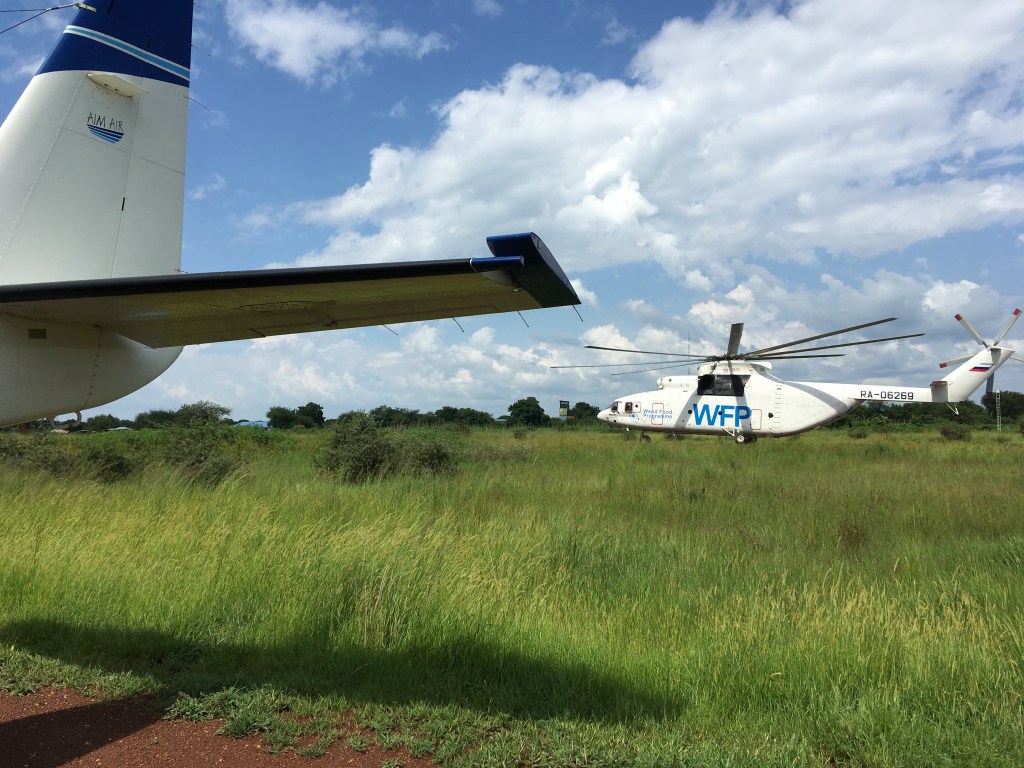
My passengers disembark and proceed to immigration while I tend to the fueling and hopefully have enough time left for a cup of ‘Starbucks’. Inside the airport building is a little stand where nice ladies serve tea and coffee. The water comes from who knows where, but it’s boiled, so it must be okay. The Nescafé instant coffee is far from a cup you’d find at Seattle’s Pike Place Market; nevertheless, it’s always something I look forward to.
Before we know it, the passports have been stamped, instant coffee refilled, and we are again airborne for our two-and-half hour flight to Maban.
South Sudan does not have radar control, so pilots talk with one another on a common frequency to deconflict the air traffic. The radio calls almost never cease, with pilots reporting their positions all over the country. Most of them are doing contract work for the United Nations World Food Program, either hauling grain or flying UN workers to parts throughout South Sudan. While the communication is in English, the accents betray where the pilots hail from. The Russian accent is the most prevalent, dominating the airwaves, along with Western European and sometimes South African accents being heard.
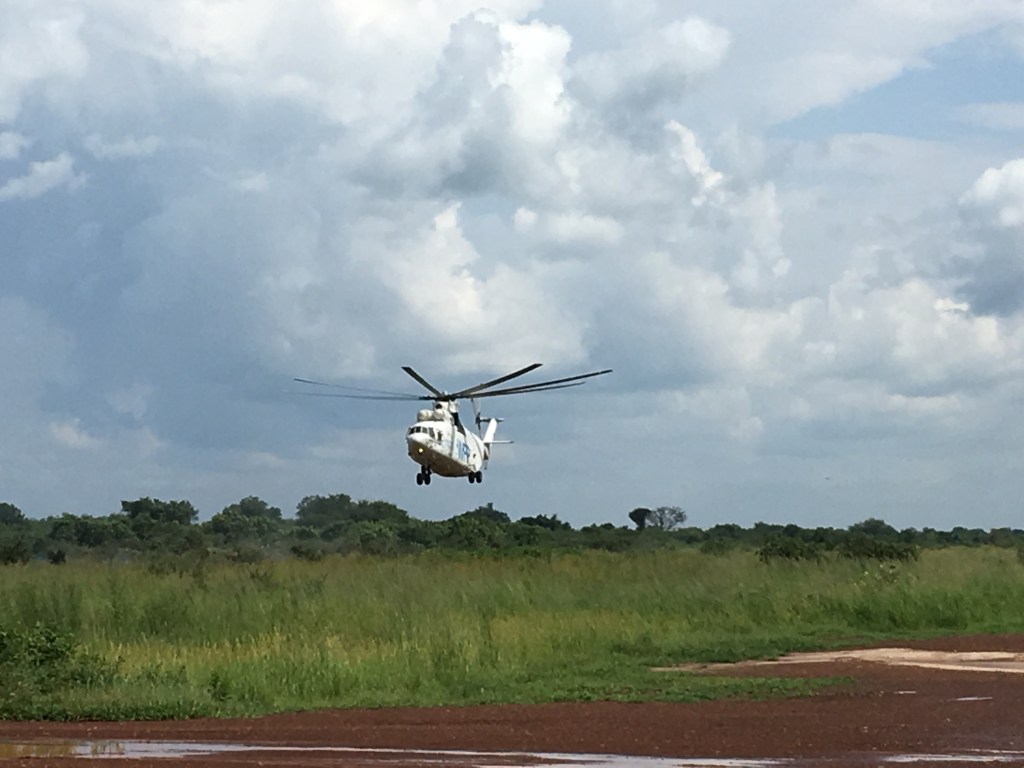
As the aircraft hums along at 11,500 feet toward Maban, I keep myself busy with a myriad of tasks: fuel management, position reporting, and engine monitoring. But one task takes priority over all of them. I am constantly examining where I will land if this single engine decides it is time for a nap, refusing to turn the propeller any more. My eyes scan for potential airstrips to glide to, or open areas that could allow for an emergency landing. Peering down at the marshy terrain below, I remain vigilant should an emergency result. Far off from my left wing, I see what looks like a white UN helicopter in a field. “Maybe that would work,” I say to myself. Most of my career has been flying four engine and twin-engine aircraft. Seeing only one propeller turning up front always makes me a little edgy, but I comfort myself in knowing that the Caravan can glide far, about 2 miles for every 1000 feet of altitude. I plan accordingly, never knowing when the engine might have a sit-down strike.
As we grow closer to Maban, I pray for the little villages located below, asking Christ to transform this nation into His Kingdom. Sometimes it seems so discouraging, as continual problems plague South Sudan. Yet, I know Christ is building His kingdom, bringing people from every tribe, tongue, and nation (Revelation 7:9) and He will be victorious. Maban has a large refugee population and the missionaries I am transporting have been helping the community and the refugees. Christ has used their work to transform lives, and now the fruit of that work is being seen as those refugees return to Sudan with the knowledge and love of Christ in their lives.
Now circling over the town, the devastation from flooding is laid out before our bird’s eye view. The river has backed up, submerging homes and endless acres of farmland. Over the airfield, I see that a large portion of the runway is dry and useable. It will be an uneventful landing. I like uneventful landings, you don’t remember them, and that is good. Our 950-mile journey North has safely come to an end with God once again answering my morning prayers for safety.
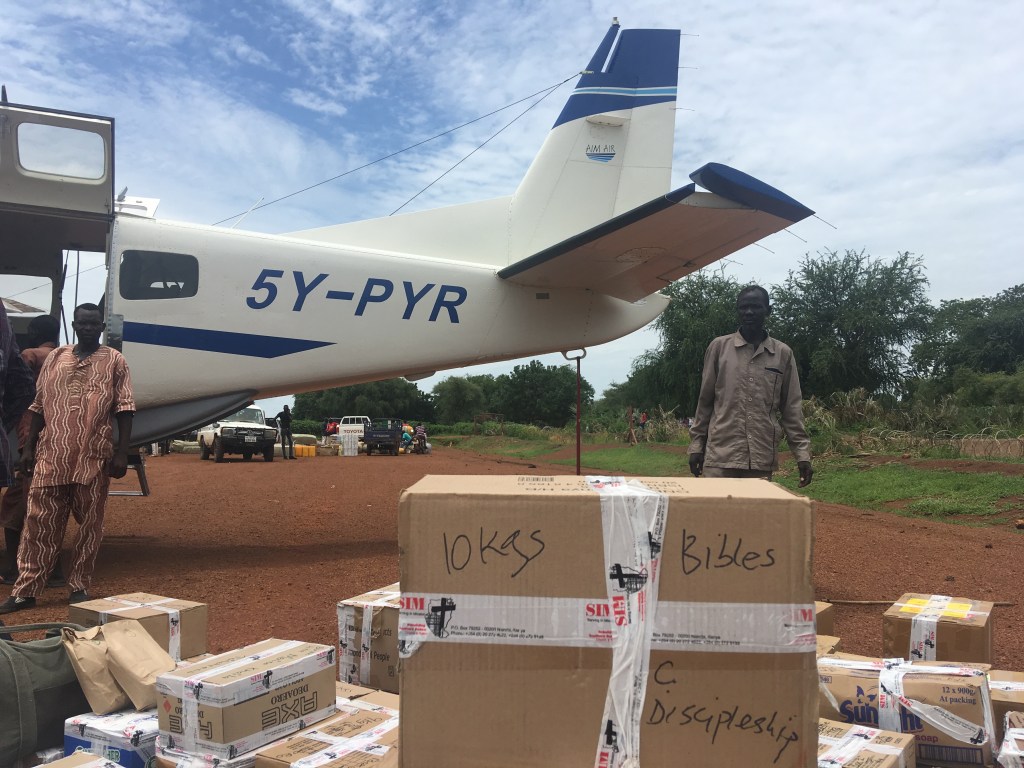
I enjoy time catching up with the SIM missionaries who come out to off load the cargo and pick up their arriving missionaries. A Bible translator with DPLI, who is working on a translation of the local language, comes over to say ‘hi’ while I tend to the airplane. It is good to see him and discuss the work he’s doing. Within an hour, I am already fueled up and headed back to Bor and then onto Northern Kenya, mindful that daylight is a precious commodity when flying in these remote parts of Africa. Thank you, support team, who made this flight and so many others possible, as we work to reach the unreached of East Africa with the Good News of Jesus Christ!
 The Halvorson Family in Africa