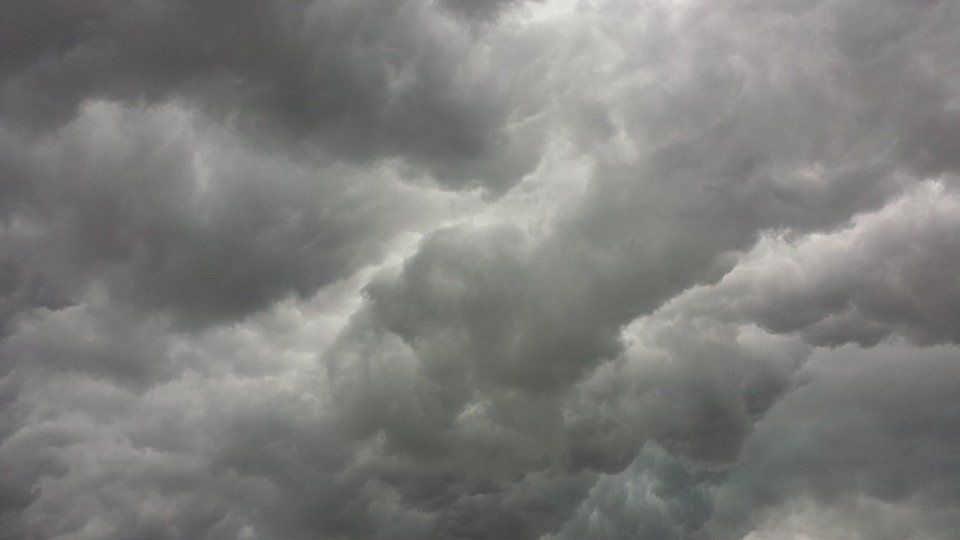
The weather radar gave its ominous red warnings showing thunderstorms impeding my approach. The angry crescent shaped band of T-storms blocked the mission station like a well-fortified army hunkered down to protect against an advancing enemy. My confidence in the weather report from an hour and half prior reporting clear skies was falling apart. I called our base, located 700 miles away, on the HF radio in an attempt to gain a current weather report. I could hear their weak and intermittent response eerily echoing through my headset, much like communication fading in and out from some distant planet. I yelled louder into my microphone, hoping that by raising my voice, I could make the atmospheric interference disappear. But like vainly yelling at a deaf man, it made no difference. I needed to know if the storms were pounding the mission station as well, or if this was just a band of thunderstorms between me and my destination.
I had one hour and 45 mins of fuel left on board and needed to make some quick decisions for possible places to land, if needed. Heading back to a suitable dirt field 50 miles behind me would be possible as it was located around clear skies, but the aircraft would be stuck without fuel in this remote location. Maneuvering northwest to my preferred alternate 80 miles away would be impossible, due to the advancing storm. The only viable option would be proceeding 90 miles East, into Ethiopia where the nearest airfield with an instrument approach and fuel was located. This would be fraught with problems though, as I did not have permission to enter Ethiopian airspace. Many questions, most of them unpleasant, would be asked of me by the airport officials, if I just happened to pop into their country and airport.

Descending through the black curtain of rain, I changed course to the East, keeping the wall of thunderstorms off my left wing. Ethiopia would be my back up plan, as I continued maneuvering around the lightning and rain. I had just reviewed the approach into the Ethiopian airfield yesterday, so I knew it was possible. The turbulence continued to buffet my tiny aircraft as I descended to 10,000…8,000…6,000 feet, finally leveling off at 5000 feet. I was glad that I did not have passengers on board during the bumpy descent. They would be sick for sure and the added distraction of people losing their lunch was not needed today. The weather radar relentlessly painted a nasty picture of the thunderstorms in my desired path, continuing to alter my course. Aware of the mountains dotting the Ethiopian border, I kept a watchful lookout for the high mountains with our onboard terrain map, as I continued to fly through the clouds.
Meanwhile, back at the Nairobi hangar, my request for another weather update was taking a circuitous route. In an effort to get a report to Dan and facing communication difficulties, the mission station coordinator in South Sudan had called missionaries at one of our AIM housing compounds in Nairobi, instead of our base operations at the hangar. She had an urgent message to relay, as the weather had dramatically changed from the clear skies report she had relayed earlier in the flight. Now the report was black skies and rain. Thunderstorms were rolling through area. The missionaries on the AIM compound relayed the report to our base operations and then did the most important thing. One of them said, “We need to pray for Dan right now.” So, in the quietness of their home on that Friday afternoon, they prayed for my safety to our loving Father.
The missionaries on the AIM compound relayed the report to our base operations and then did the most important thing. One of them said, “We need to pray for Dan right now.”
I was oblivious to all of this, as I continued my slow descent trying to avoid overstressing the airplane with the wind gusts buffeting me back and forth. I checked my Garmin app for messages, hoping to receive a weather update as the HF radio only crackled with static. No incoming messages. I would continue my circuitous approach toward my destination, avoiding the thunderstorms, all the while hoping the mission station was not being battered by rain as well.
During periods of high stress, all aviators from Charles Lindbergh to Chuck Yeager to those flying the 777 around the world, pull back to one adage that has kept us safe through the years. It simply goes, Aviate, Navigate, and Communicate. When the stress level is high, those three statements keep you focused on the order of priorities. As I continued to evaluate and reevaluate my options through my risk management lens, those three priorities kept burning through my mind. I prayed, “Lord, help me to keep focused on what I need to and guide me through this” as I continued prioritizing my work.
Aviate, navigate, communicate…As I continued to evaluate and reevaluate my options through my risk management lens, those three priorities kept burning through my mind.
Aviate: I would keep flying the airplane, focusing on airspeed and rate of descent, while ensuring checklists were complete, keeping the airplane safely configured and within safe parameters.
Navigate: I would stick with my plan to fly along the Sudan/Ethiopian border, not taking chances near the T-storms, giving them healthy distance, while being aware of where my aircraft and the high terrain were at all times.
Communicate: this part would be a little more difficult, as the HF radio was producing heavy static making it unusable and the Garmin InReach satellite messages were not giving timely information due to transmission lag. But I could keep transmitting in the blind on the local VHF radio, in case anyone at the airfield could hear me.
The simple adage: Aviate, Navigate, and Communicate grounds us aviators to be focused on the main things in order of priority and not let the little things distract us from the critical tasks at hand. The weather radar confirmed my plan was working as I continued along the border. The red and yellow bands on the display warning of hail, lightning, and turbulence were now to the South of me. If I proceeded directly toward the airfield, now just 20 miles away, I would be traversing through moderate rain, but not in danger of penetrating a thunderstorm.
Still in the clouds and referencing the weather radar scope, I directed the aircraft straight into the green display band showing steady rain. I would maintain a direct course through the rain for 10 miles, not turning to the left or right. The rain pounded steadily on the windscreen as the aircraft pitched intermittently due to turbulence. It was not getting worse or better, just continued steady rain. “Stay the course,” I told myself. Over the years I had come to trust this piece of equipment, “Follow the green band on the display and eventually I will be through it,” I thought to myself.
Sure enough, I continued my course and came through the hard rain while avoiding the rising terrain further to the East. Continuing my descent in the clouds and now light rain, I leveled off 1000 feet above the ground, as I selected the airfield on my flight path indicator. The airfield does not have a published approach, currently none are available in South Sudan, but by using the GPS coordinates and the runway heading, I could draw a line with my instruments to fly directly to the airfield. My horizontal visibility in front of the nose was very limited, but I could now see the ground through the low-level clouds and light rain. I would continue toward the airfield and hope to see the runway; if not, I was headed to Ethiopia.

Wondering if I would be landing in a few minutes at the mission station, or eating injera and tibs with lots of explaining to do for the Ethiopian officials, I pressed on toward the airfield in hopes of it somehow appearing. Within a mile and half of my destination, the airfield slowly came into view, as lingering clouds reluctantly revealed their hidden treasure. The runway was fully visible, and the murram soil looked dry enough to land. I quickly readied the aircraft for landing and pulled back the power. Soon enough I was enjoying the comfort of the soil beneath my feet.
Wondering if I would be landing in a few minutes at the mission station, or eating injera and tibs with lots of explaining to do for the Ethiopian officials, I pressed on toward the airfield in hopes of it somehow appearing.
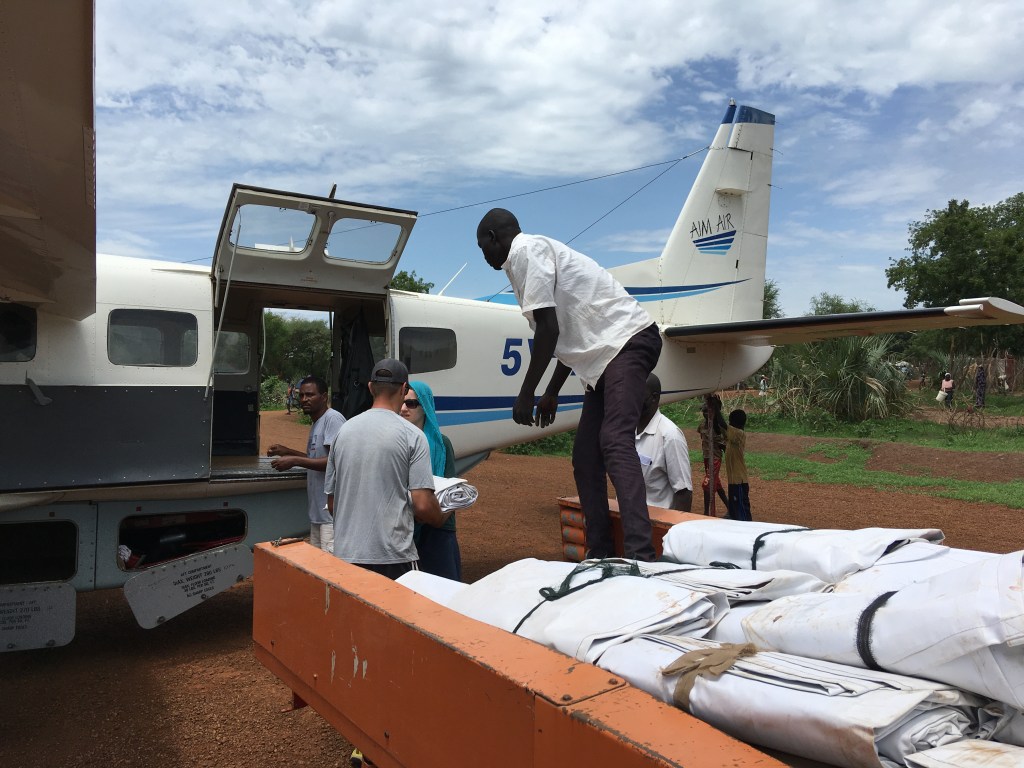
With a hearty thanksgiving, I greeted the missionaries on the ground as we unloaded the tents and blankets that I was transporting for the churches to distribute to the displaced people. It was then that I learned how the weather had quickly changed from the initial weather report they had given me to the thunderstorms blowing into the area. Just 5 minutes before my arrival, the weather abated opening up a brief window for my approach and landing. As we talked, lightning continued to thunder in the area, and we delayed our fueling for an hour because of yet another storm blowing through. God had answered those prayers from a mission house 700 miles away and probably prayers from around the world that day, as a brief window in the storm opened up for my safe arrival!

Days and days go by with easy-going flights, but then a day like today reminds me how dangerous mission flying can be. With limited information and available alternatives in the remote places we often operate, problems can quickly stack up, making mission flying unpredictable and suddenly dangerous. I am thankful for the good instruction I’ve received from all those who trained me at JAARS, AIM AIR, MATA, and the U.S. Navy. So many have poured into me over the years, and I relied upon their many years of experience. I am thankful to those who constantly lift our family up in prayer from around the world and those who stopped to pray for me that Friday afternoon. And I am thankful to God for being a God who hears and answers prayer!
~Dan


Leave a Reply